


Skip to content
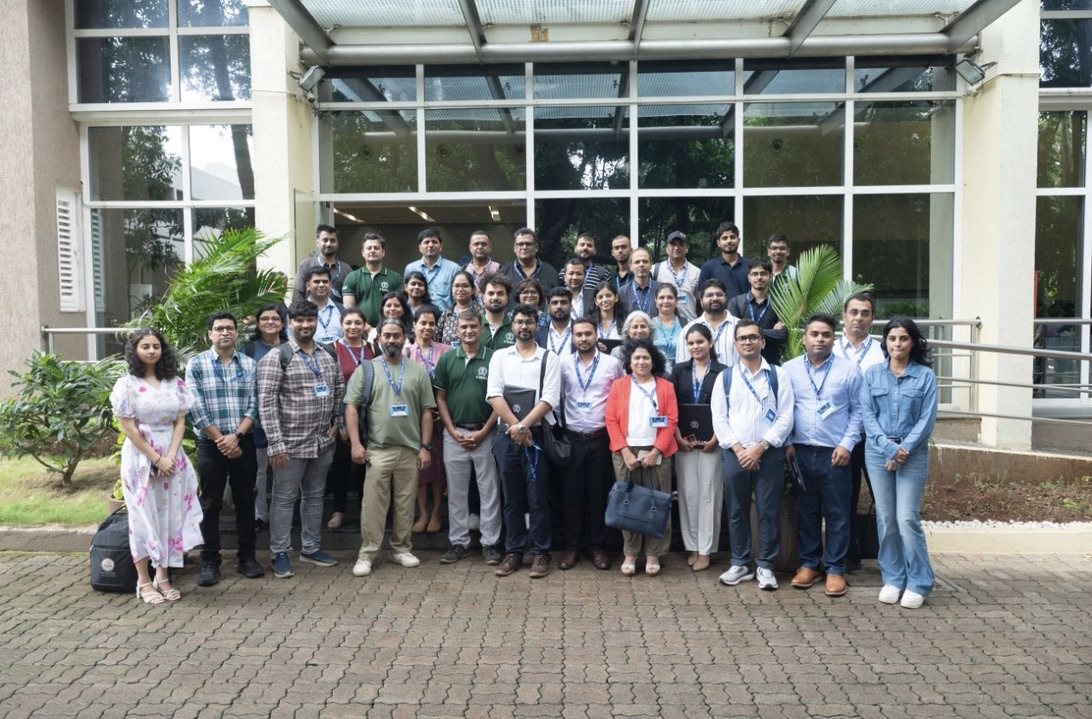
Participants of the Generative AI for Working Professionals programme at IIT Mumbai, gathered outside for a group photograph

Generative AI for Working Professionals at IIT Mumbai

UpskillingFor universitiesStudentsFaculty

Make your next batch AI-employable. Without rewriting the syllabus.

Runs alongside your existing curriculum, no syllabus change needed. Every student ships one working system per level and defends it, so what they carry into placement interviews is theirs, not a chatbot’s.

students trained in 2026
500+
students trained in 2026
enterprise-grade distinct project tracks to choose from
55+
enterprise-grade distinct project tracks to choose from
consistent feedback across engagements, with 96% approval ratings
4.6 / 5
consistent feedback across engagements, with 96% approval ratings
enterprise engineering across the team: ex-AWS, ex-Microsoft, ex-Morgan Stanley
20+ years
enterprise engineering across the team: ex-AWS, ex-Microsoft, ex-Morgan Stanley

Facilitated by practitioners from

AWSMicrosoftGoogleMorgan Stanley

and other leading product and AI companies

Delivered

What we have delivered so far

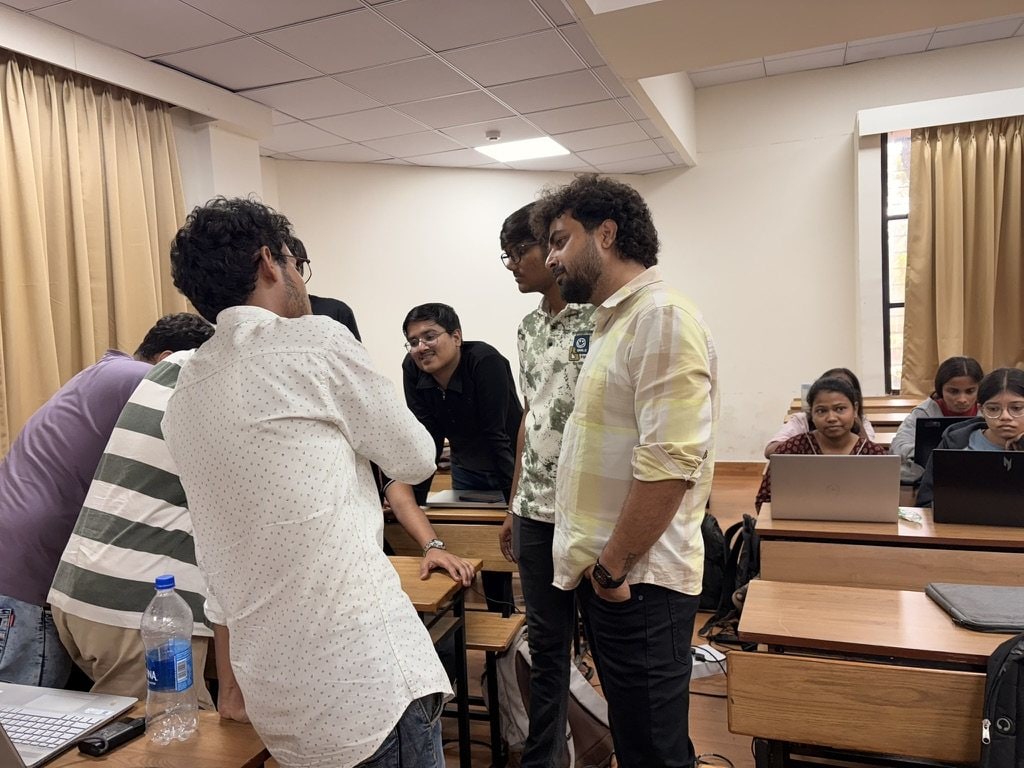
Students gathered around Ashish Tripathi during a workshop at S.P.I.T. Mumbai

S.P.I.T. Mumbai

Teams of second-year students designed, built and deployed a fraud-detection system end to end over a hands-on April workshop, then a full placement-readiness programme ran across the batch in June.

Students rated the workshop 4.6 out of 5, and almost all of them said they would recommend it.

A second placement-readiness cohort of more than 250 students is running now, September 2026 to April 2027: agentic AI paired with fortnightly assessments, course material and student analytics, aimed squarely at online assessments and interviews.

student rating
4.6 / 5
student rating
would recommend it

96%
would recommend it

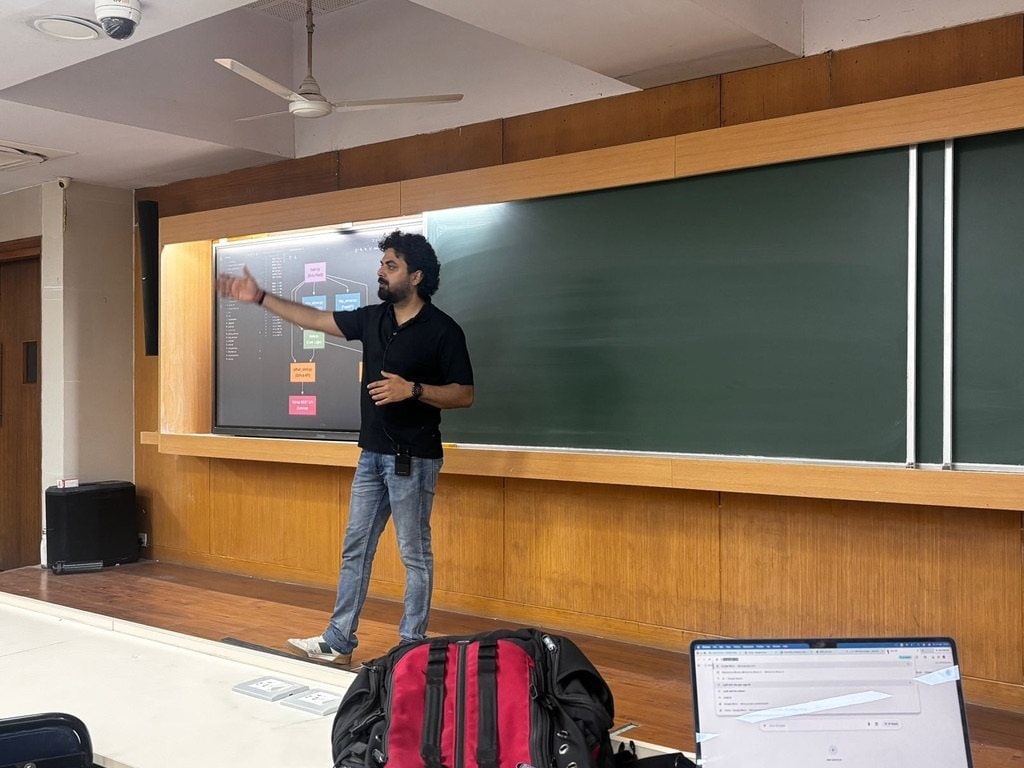
Ashish Tripathi teaching at a board in an IIT Bombay lecture hall

IIT Bombay

A campus session on agentic AI and the Model Context Protocol for the B.Tech and M.Tech cohort, alongside the hands-on sessions taught inside the Generative AI certificate run by TCA2I with Great Learning.

average rating across programmes
4.5 / 5
average rating across programmes

Student voices

What students say

Vedansh Dubey
System design matters more than coding. You guide the AI instead of blindly handing it ideas, and you test at every phase and iterate as you go.
Vedansh Dubey, Electronics and Telecom, S.P.I.T. Mumbai
  • System design matters more than coding. You guide the AI instead of blindly handing it ideas, and you test at every phase and iterate as you go. Vedansh Dubey, S.P.I.T. Mumbai
  • The concepts were not introduced arbitrarily. Each topic was developed from the fundamentals, which made them far easier to understand. Krisha Jain, S.P.I.T. Mumbai
  • I learned how to design a real-world fraud detection system using rule-based logic, APIs and dashboards. It helped me understand how data, risk scoring and AI work together to detect and explain suspicious transactions. Shruti Suryawanshi, S.P.I.T. Mumbai
  • I learned to use AI while understanding exactly what was being done underneath. Dhruv Gangurde, S.P.I.T. Mumbai
  • The event was awesome. So many new technological learnings in just two sessions of six to eight hours. From AI to application building, every concept was beautifully explained with a clear, step-by-step approach. The biggest takeaway: the right use of AI can produce great results. Nirupam Gupta, S.P.I.T. Mumbai
  • The session was extremely beneficial for someone like me, a beginner in the project-making domain. Hands-on mentor guidance for building an enterprise-grade project on a real-world problem, explaining every nuance while keeping the big vision in mind. I would certainly recommend it to my friends. Atharva Khairnar, S.P.I.T. Mumbai

  • I learned how to use AI efficiently and how it actually works underneath: context, tokens, embeddings. I also learned how to build an application with AI’s help, structurally and logically, running checks and reviews at every stage. Aryan Rajiv Gupta, S.P.I.T. Mumbai

  • I learned how to build a full-stack website using Python. It gave me in-depth knowledge of a new tech stack and of the business point of view, especially while picking up a cyber security related project. Ridhima Srivastava, S.P.I.T. Mumbai
  • I gained hands-on experience deploying a real-world AI-based fraud detection project. I understood the complete pipeline from design to development to deployment, and how components like FastAPI, a Streamlit dashboard and ML models integrate in production. Dhangar Gangesh Sanjay, S.P.I.T. Mumbai
  • I learned how enterprise-grade software is actually built, step by step. I also came away with a clear sense of how to move ahead in my career. Dhruv Bhalani, S.P.I.T. Mumbai
  • I came away with clear insights on building a project from scratch, even without much prior knowledge of high-level systems and APIs. Krrish Sonavane, S.P.I.T. Mumbai

  • I understood how to build an end-to-end AI application using a structured workflow, with hands-on experience of real-world tools and a genuine industry use case. Harshita Yadav, S.P.I.T. Mumbai
  • Using AI tools to build end-to-end products matters, and so does having the core knowledge underneath them. Nidhi Rajkamal Dhyani, S.P.I.T. Mumbai
  • I learned how to create a complete application with AI, in an effective and properly structured way. Rashi Wahane, S.P.I.T. Mumbai
  • I saw how easily you can build a good, functional website with tools like Antigravity, and also that you still need to understand frontend, backend and APIs to shape it the way you want. Yash Suhas Gramopadhye, S.P.I.T. Mumbai
  • You should be able to identify the mistakes AI makes, and that comes from understanding how AI works. Pranav Ganesh Deshmukh, S.P.I.T. Mumbai

Why this programme

Placement season is months away. A vibe-coded portfolio won’t survive it.

Almost every graduate this year will show up with AI projects. Most were prompted into existence, and the recruiters can tell. What firms are hiring for is different: people who can build systems, and who know where AI fails.

Vibe-coded experienceThe graduate firms hire
What they buildAn app that works on the demo pathA system with tests, evals and guardrails
What they can explainWhat the prompt wasWhy the architecture is what it is, and what it costs to run
When AI failsRe-prompts and hopesReads the trace, isolates the failure, fixes the root cause
In the interviewTalks about toolsTalks about trade-offs: quality, latency, cost, safety

What interviewers actually ask · Why this architecture? Which fundamentals does it use, and why? How does it scale? Where does the AI fail, and what did you do about it? This programme makes your capstone the one project you can defend.

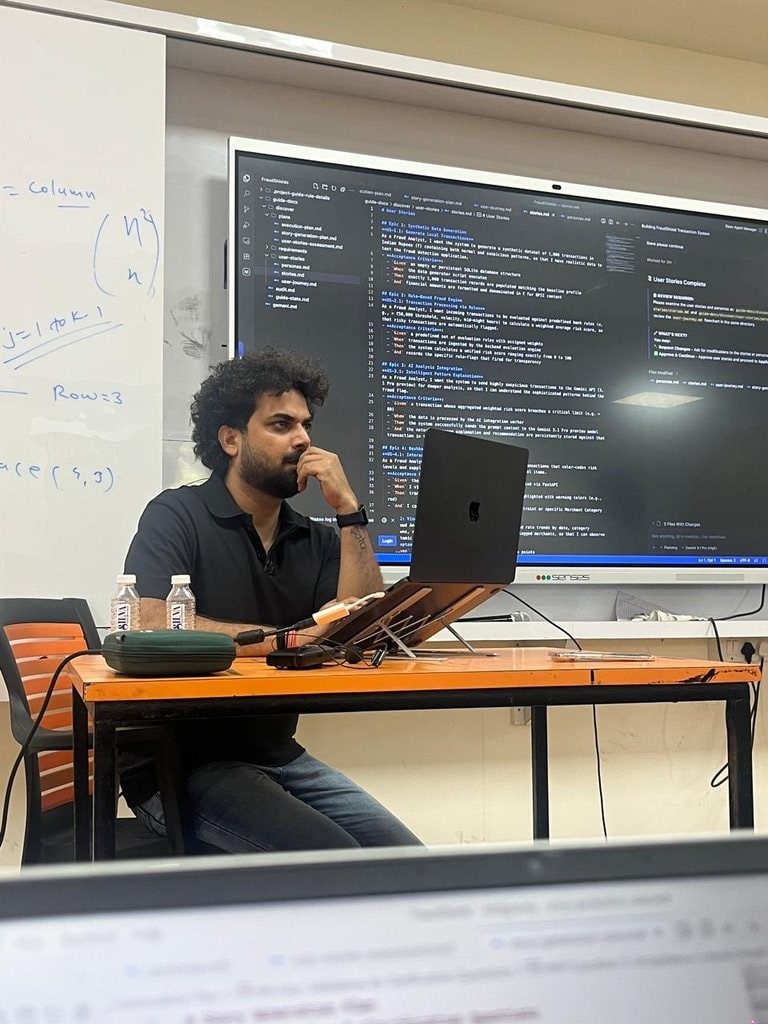
A build session with the system plan on the screen behind the room

Enterprise readiness

Enterprise readiness: how companies build today.

Students see the shape of a real system, not a tutorial project. Engineering cohorts build it; management cohorts design and direct it.

  • Systems architecture

    Services, data, interfaces and the AI integration points, drawn the way a hiring panel expects to see them.

  • Guardrails and review

    Approval gates, evaluation inside the pipeline, and a person on every output that leaves the team.

  • Lifecycle discipline

    Tests written first, versioned changes and a deployment that can be rolled back. The habits enterprises interview for.

The bootcamp

Four levels. Pick the one your students are ready for.

Every level ends with something deployed. Engineering students build in code; management students build AI workflows and the product thinking around them.

  1. L1

    AI Kickstart

    8 hours

    First AI exposure, and one deployed application built with AI.

  2. L2

    Foundations

    16 hours

    Systems engineering foundations, and one full-stack AI application.

  3. L3

    Advanced

    32 hours

    One production-grade multi-agent system with enterprise architecture, MCP and A2A.

  4. L4

    Champion

    48–64 hours

    Everything in L1 to L3, plus a deployed capstone, interview readiness and placement support for the top 10%.

  • 100% hands-on, 20+ labs across the four levels
  • Optional integrated curricula are available for AWS, Microsoft Azure, and Google Cloud AI certifications
  • Mock interviews with practitioners

Students in Levels L2 to L4 receive a recruiter-ready portfolio, interview readiness, and up to 60 days of post-workshop support through weekly office hours.

The stack

80+ AI-native enterprise tools across the stack.

Students work with the tools and frameworks used in enterprise AI engineering and agent development. The set widens at each level.

AI coding agents and IDEs

  • Claude
  • Cursor
  • GitHub Copilot
  • Kiro
  • Windsurf
  • Google Antigravity
  • Codex
  • VS Code
  • JetBrains
  • Terminal

Models and providers

  • OpenAI
  • Gemini
  • DeepSeek
  • Grok
  • Qwen
  • Meta AI
  • Ollama
  • Hugging Face

Agentic frameworks and protocols

  • LangChain
  • LangGraph
  • CrewAI
  • Heroku
  • Agentforce
  • Amazon Quick
  • MCP
  • Agent2Agent

Cloud and infrastructure

  • AWS
  • Amazon Bedrock
  • Microsoft Foundry
  • Google Cloud
  • Microsoft Azure
  • NVIDIA

Data, vector DB and search

  • PostgreSQL
  • SQL Server
  • MongoDB
  • CockroachDB
  • Supabase
  • Redis
  • Snowflake
  • Databricks
  • Tableau
  • ChromaDB
  • Pinecone
  • Milvus
  • OpenSearch
  • Amazon OpenSearch
  • Elastic

Languages and app frameworks

  • Python
  • Java
  • Go
  • Node.js
  • .NET
  • PHP
  • Ruby
  • Scala
  • Clojure
  • React
  • Tailwind CSS
  • Streamlit
  • FastAPI
  • Android
  • iOS
  • Pydantic

DevOps and deployment

  • Docker
  • Kubernetes
  • Terraform
  • GitHub
  • GitLab
  • Vercel

Testing and observability

  • pytest
  • LangSmith
  • Datadog
  • Dynatrace
  • New Relic

Automation and integrations

  • Zapier
  • Make
  • n8n
  • Salesforce
  • Slack

Project management and design

  • Asana
  • Atlassian
  • Figma

The list is indicative and updated as the field changes; final details are shared before each cohort. All product and organisation names are trademarks of their respective holders, and their use here does not imply affiliation or endorsement.

The DeployProAI difference

What other programmes teach, and what we deliver.

Other programmes teachWe deliver
Generic AI and ML theory.AI tools enterprises actually use: Antigravity, Cursor, Claude Code, Copilot.
Certificates of completion.A recruiter-ready portfolio and systems engineering with deployed projects.
Theoretical assignments.100% hands-on, production-grade products with real enterprise guardrails and clean architectures.
One-time faculty workshops.Sustained centres of excellence for institutional self-sufficiency.

Measurable impact for your institution

Deployable portfolios. Better placement conversion.

Deployable portfolios

Students graduating with production-grade AI systems and an end-to-end understanding of how enterprises work, by building software natively with AI.

Placement conversion

Improved interview-to-selection conversion rates, from stronger recruiter confidence in student capability.

  • A higher share of students with deployable GitHub portfolios
  • Improved interview-to-selection conversion rates
  • Stronger recruiter confidence in student capability
  • Enhanced placement outcomes and institutional brand

Real-world projects aligned to hiring domains

Projects are chosen by department, and mapped to the roles that hire.

55+enterprise-grade projects to choose from, across sectors, or bring your own

BFSI

  • Regulatory Compliance Scanner
  • Fraud Alert Dashboard
  • KYC Document Processor
  • Loan Eligibility Agent
  • Insurance Claims Analyzer
  • Financial Report Summarizer
  • AML Transaction Monitor

Cross-domain

  • AI Code Review Bot
  • Smart Resume Screener
  • E-commerce Recommender
  • Healthcare Triage Bot
  • Customer Support Agent
  • Meeting Notes Summarizer
  • Competitive Intel Dashboard
  • Legal Document Analyzer
  • EdTech Quiz Generator

Advanced pathways

Advanced pathways, by role, and the roles they lead to.

CourseDurationFor
Product Thinking with AI16–32 hoursAspiring product managers and management students
AI for QA Engineering16–32 hoursQA roles, test automation
AI for Full-Stack Developers16–32 hoursWeb developers, full stack
AI for DevOps Engineers16–32 hoursDevOps, SRE, infrastructure
AI for System Design16–32 hoursArchitecture interviews, senior developer track
AI Security and Governance16–32 hoursAI compliance, cyber security and responsible AI

Customised courses are also available for non-technical roles: finance, sales, marketing, HR and operations.

FAQs

Frequently asked questions

Any year and any branch, engineering or management. Workshops are pitched to the cohort: first-year students build their first deployed application; final-year students build multi-agent systems for their portfolio; management students build AI workflows and the product thinking around them.

Not for L1 and L2. They start from the fundamentals and every concept is built up step by step. L3 and L4 assume programming basics; the placement-readiness intensive assumes Python and data-structures basics, checked with a short pre-session self-assessment.

A working product on a real-world problem from a catalogue of more than fifty-five, across BFSI, healthcare, e-commerce, legal and education, or their own idea. Past cohorts have built and deployed a fraud-detection system end to end.

A deployed product at a live URL, a repository with the documentation that makes it credible to reviewers, a drafted LinkedIn showcase post, a recorded demo, a certificate, and interview talking points grounded in what they built.

DeployProAI’s enterprise-grade AI software development harness: templates, architectures and coding standards that make every student build production-quality. On the placement-readiness intensive, access continues after the workshop for the student’s own projects.

A room or lab, laptops with internet access, and a faculty coordinator. We bring the tools, the projects and the facilitators.

Workshops run best at 25 to 60 students, working in teams of three to five. Placement-readiness programmes have run for more than 300 students in parallel groups.

An 8-hour or 16-hour level fits between examinations or into a project week. Longer levels run alongside the semester with two sessions a week, or as credit-linked modules.

Weekly office hours for up to 60 days on L2 to L4. On the placement-readiness intensive, three monthly mentorship sessions, an AI-native assessment folded into the placement office’s fortnightly plan, and a 24/7 AI course companion.

Per programme, based on the level and the batch size. We share a fixed proposal after a short call with your placement office or department.

Bring us one batch.

Tell us the year, the branch and the week you have in mind. We will propose a level that ends with every student deploying something.

Also for your institute

AI-Native Pedagogy Leader Programme

For your faculty: six days to redesign assessments and curriculum for the AI era, set course-level AI-use policies and build working AI assets.