DEPLOYPROAI ENGINEERING · AI TRANSFORMATION · AI RESEARCH
Evidence beforewe commit your budget.
Short, focused studies that test models, agent designs, serving options and adaptation approaches against your actual workflows. We run these in a controlled setup that reflects your environment, before any production build starts. Each study ends with numbers you can use to make a decision.
- Feasibility studies
- Model evaluation
- Agent architectures
- Evaluation harnesses
- Safety testing
- Serving economics
- Build-or-buy evidence
- AI answer visibility
The problem we solve
Vendor demos run on clean data. Yours carries years of exceptions.
- Benchmarks are usually run on clean data that doesn’t look like yours.
- The model you choose sets your costs and locks you in for years.
- Quality drifts under you even when the model name never changes.
- Without a test setup, model decisions turn into opinion.
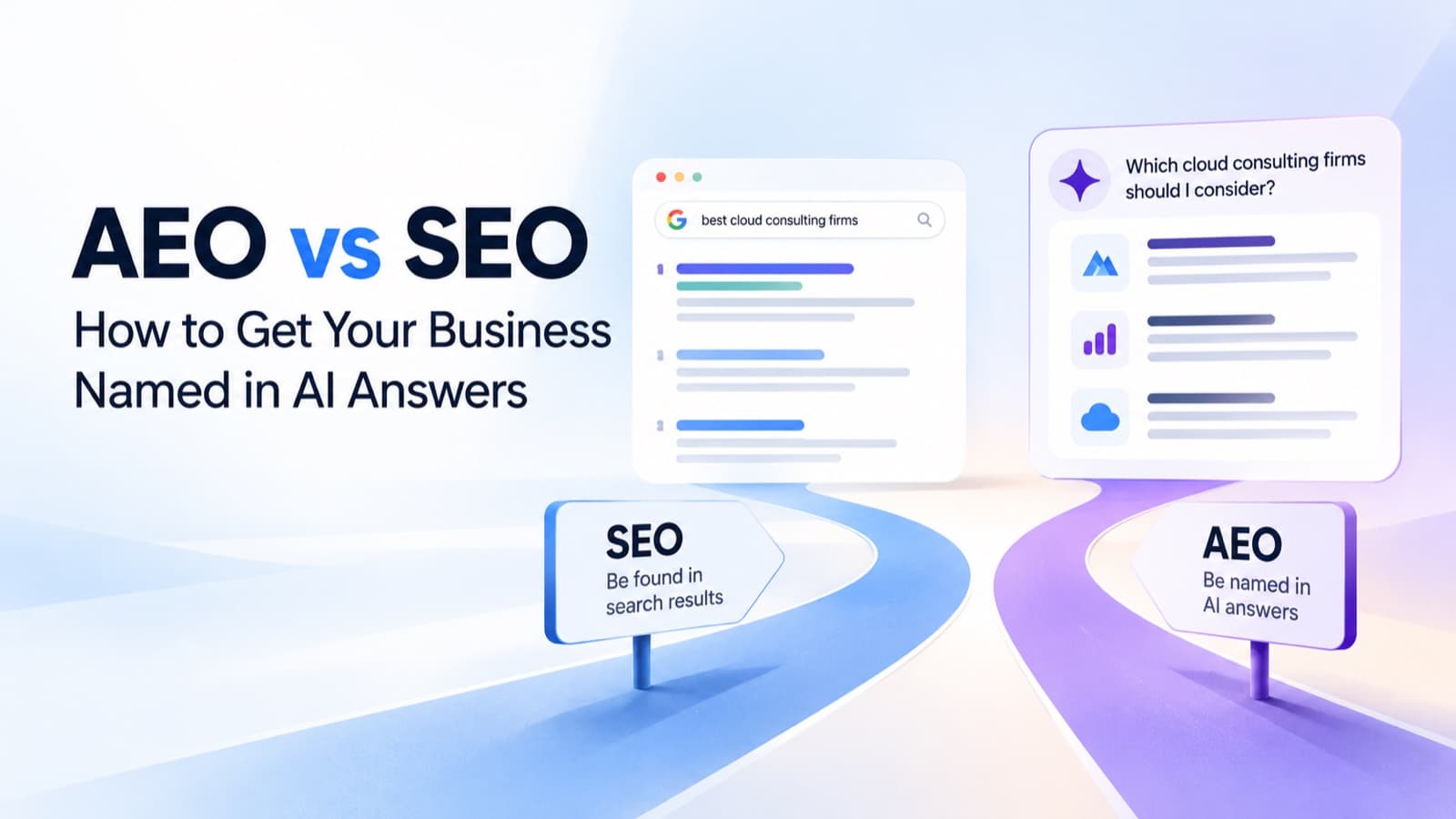
- Buyers now ask ChatGPT, Gemini, Claude and Perplexity about you before they visit your website, and nobody checks what the answers say.
- Wrong pricing, credentials or outcome claims in those answers go uncorrected, and send prospects elsewhere.
The data isn’t comfortable.Developers using AI took 19% longer while believing they were 20% faster. And 44% of AI-generated code had security issues. Clicks on search results fall from about 15% to about 8% when a Google AI summary appears (Pew Research Center, 2025).
Step 1
Frame the question
Define one clear question, using a real dataset from your systems. Set what “good” looks like across quality, cost, latency and safety.
Step 2
Build the harness
Build a reusable test setup and scoring logic that lives in your repo and can be run again later.
Step 3
Run and measure
Run all options on the same setup. Track cost, latency, failures and quality side by side.
Step 4
Report and decide
You get the results, where things failed, and a clear recommendation. The decision is recorded so your team can act on it.
What we build
What a study produces.
Feasibility and limits
Can this actually be done with a model? How well does it work, and where does it break?
Model and approach comparison
Different models and approaches tested on the same task, with the same data and scoring.
Reusable test setup
A test setup and scoring logic in your repo, so future changes can be tested before release.
Failures, risks and safety
Where the model fails, what it gets wrong, and where human checks or safeguards are needed.
Performance and cost profile
Measured cost, latency and system behaviour at the scale you expect to run.
What to do next
What works best for your case and why (prompting, retrieval, or tuning), plus a clear build, buy, or wait recommendation.
AI answer visibility
How often ChatGPT, Gemini, Claude and Perplexity name you, whether they describe you accurately, and a ranked plan to fix it.
AI Answer Visibility Assessment and Advisory
When someone asks AI about your business, what does it say?
Customers increasingly ask ChatGPT, Gemini, Claude and Perplexity before they ever visit your website. We measure how often AI names you, whether it describes you accurately, and what to fix, online and offline.
How it works
- 1Assess
20 real buyer questions across 4 AI engines: 80 answers per domain, scored by decision stage. You get a Gap Report and a prioritised action plan.
- 2Fix
We guide your IT, marketing, communications and front-line teams (sales, admissions, customer service) to close the gaps, highest-impact first.
- 3Sustain
AI answers change every month. We re-run the same question set so progress is comparable, and drive the ongoing work.
What you get
Know exactly where AI names you, and where it sends your prospects elsewhere
Wrong pricing, credentials or outcome claims found and corrected at source
One ranked plan across tech and non-tech work
A score you can track over time
What you walk away with
Deliverables. Not promises.
What “good” looks like: a threshold sheet for quality, cost, latency and safety, agreed before testing starts
A reusable test setup in your repository that can be run again as models or prompts change
A side-by-side comparison of models and approaches on the same task, using the same data
A catalogue of where the system fails, with real examples, and where safeguards are needed
Measured cost, latency and system behaviour at the scale you expect to run
A written recommendation to build, buy or wait, along with the reasoning behind it
Proven Across Enterprises and Academia


- India's Largest Health Insurer

 IIT Bombay
Customer outcomes
Solutions engineered for impact
FAQs
Frequently asked questions
It’s a short, focused effort to test models and approaches on your actual workflows before making a production decision. Run it when you have a clear use case but no reliable way to compare options or estimate outcomes.
Not by default. We can run this using representative or masked data in a controlled setup. If needed, we can also design for fully isolated or self-hosted options.
You get measured results across quality, cost, latency and failure cases, along with a clear recommendation. If the results are strong, you have what you need to move forward. If not, you know what needs to change before investing further.
To optimize for AI Overviews specifically, start each section of your content with a direct sentence that answers the question in the title or header. Also ensure that each section of your content is self-contained and makes sense when taken out of the broader article’s context.
No, traditional SEO is not dead. Traditional search engines still drive traffic to websites, and Google still sees five trillion searches per year. While AI search traffic is likely to grow, AI SEO builds on SEO foundations rather than replacing them.
The ROI timeline for AI SEO efforts will vary depending on the optimizations you make and your specific niche.
AI will probably not replace traditional search engines, at least not fully. AI search is growing, but different users prefer different search methods depending on their task. Optimizing for both ensures you capture users across a wider range of search behaviors.
Start with a real use case.
Tell us what you’re trying to evaluate. We’ll show you what it takes to test it properly, before you commit budget.
- NDA-first
- Your codebase
- Measured with DORA and SPACE
- GDPR
- DPDP
- SOC 2 practices
- PCI-DSS
- IRDAI-aware
- EU AI Act